 Miles Calculator
Atmos Rewards: distance or price paid?
Rules checked October 8, 2026
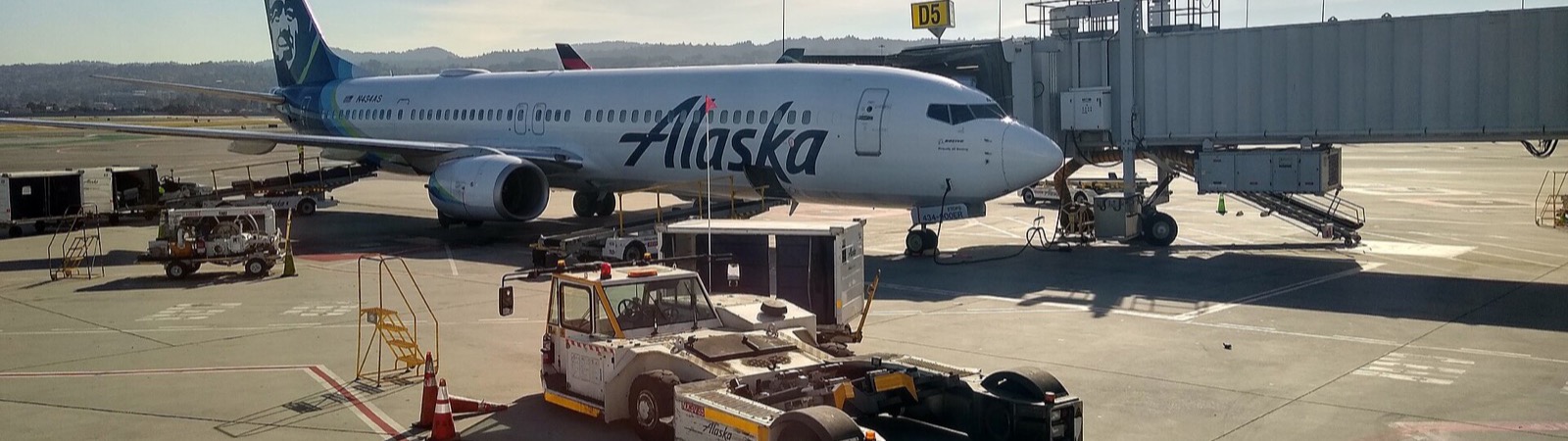
From January 1, 2027, Alaska Airlines and Hawaiian Airlines members pick how they earn Atmos Rewards points and status points on flights. The two main choices are distance traveled, which pays 1 point for every mile flown, and price paid, which pays 5 points for every US$1 of fare. Which one is better depends on what you fly and what you pay. Here are four typical flyers.
Five points per dollar against one point per mile means price paid wins when you pay more than US$0.20 for every mile you fly, and distance wins when you pay less. Short flights, premium cabins and peak-season fares usually cost more than that. Long flights in economy usually cost less.
The four flyers at a glance
| Flyer | Distance traveledpoints in a year | Price paidpoints in a year | Better choice |
|---|---|---|---|
| The California commuterSan Francisco–Los Angeles, economy, 40 round trips, assumed US$180 each | 26,998Silver | 36,000Silver | Price paid27¢ per mile |
| The coast-to-coast economy flyerSeattle–Boston, economy, 10 round trips, assumed US$450 each | 49,914Gold | 22,500Silver | Distance9¢ per mile |
| The premium-cabin travelerSeattle–New York, First Class, 8 round trips, assumed US$1,600 each | 38,742Silver | 64,000Gold | Price paid33¢ per mile |
| The Hawaii regularSeattle–Honolulu, economy, 6 round trips, assumed US$700 each | 32,127Silver | 21,000Silver | Distance13¢ per mile |
Status levels are Silver at 20,000 status points, Gold at 40,000, Platinum at 80,000 and Titanium at 135,000. Fares are our assumptions, so check them against what you pay. Points and status points are the same under both options.
1. The California commuter: 40 round trips San Francisco–Los Angeles
A consultant who flies between the Bay Area and Los Angeles every week or so: 40 round trips, 80 flights. The fare is assumed at US$180 round trip, which comes to 27 cents for every mile flown.
| Option | Per round trip | In a year | Status reached |
|---|---|---|---|
| Distance traveled1 point per mile | 675 | 26,998 | Silver |
| Price paid5 points per US$1 | 900 | 36,000 | Silver |
Price paid wins. Short flights earn few miles, but their fares are high compared with the distance. Price paid earns 36,000 points against 26,998 for distance, which is within 4,000 points of Gold. This flyer should also look at the third option, segments flown: 80 flights at 500 points each is 40,000, which reaches Gold. Our calculator doesn't show that option yet.
2. The coast-to-coast economy flyer: 10 round trips Seattle–Boston
A manager who flies from Seattle to Boston ten times a year, in the cheapest seats that aren't Saver fares. The fare is assumed at US$450 round trip, which comes to 9 cents for every mile flown.
| Option | Per round trip | In a year | Status reached |
|---|---|---|---|
| Distance traveled1 point per mile | 4,991 | 49,914 | Gold |
| Price paid5 points per US$1 | 2,250 | 22,500 | Silver |
Distance wins by a wide margin. A cross-country flight at an ordinary fare earns 4,991 miles for US$450. Choosing distance reaches Gold, with 49,914 points; price paid reaches only Silver, with 22,500. The break-even fare is US$998 round trip, more than double what this flyer pays.
3. The premium-cabin traveler: 8 round trips Seattle–New York
A partner at a law firm who flies First Class from Seattle to New York eight times a year. The fare is assumed at US$1,600 round trip, which comes to 33 cents for every mile flown.
| Option | Per round trip | In a year | Status reached |
|---|---|---|---|
| Distance traveled1 point per mile | 4,843 | 38,742 | Silver |
| Price paid5 points per US$1 | 8,000 | 64,000 | Gold |
Price paid wins, by enough to change tier. A First Class fare is high compared with the miles flown, so price paid earns 64,000 points against 38,742 for distance. That is Gold instead of Silver, and distance falls 1,258 points short of Gold. Premium cabins earned a big bonus in Alaska's 2026 chart, which goes away under distance traveled in 2027, so this is the group the change affects most.
4. The Hawaii regular: 6 round trips Seattle–Honolulu
Someone with family in Honolulu who flies there six times a year, on mixed-season fares. The fare is assumed at US$700 round trip, which comes to 13 cents for every mile flown.
| Option | Per round trip | In a year | Status reached |
|---|---|---|---|
| Distance traveled1 point per mile | 5,354 | 32,127 | Silver |
| Price paid5 points per US$1 | 3,500 | 21,000 | Silver |
Distance wins, though both options end at Silver: 32,127 points on distance and 21,000 on price paid. The break-even is US$1,071 round trip. If this flyer often pays peak-season fares above that, price paid is better, so check the fares you actually pay.
Things that apply to everyone
- You can change your choice once a year, for future travel. Members who don't choose keep earning by distance, and members who join on or after January 1, 2027 start on price paid.
- Saver and Basic Economy fares earn nothing under either choice.
- Price paid leaves out taxes and fees, but counts carrier-imposed surcharges and paid seats and upgrades on Alaska and Hawaiian. Use the fare before taxes.
- Distance loses its fare-class bonus in 2027. Under the 2026 chart, premium cabins earn up to 200% of the distance. From 2027, distance pays 1 point per mile whatever the cabin, and the 500-point minimum on flights under 500 miles goes too.
- The third option is segments flown: 500 points for every flight, best for short hops. It isn't in this comparison or the calculator toggle yet.
- Partner flights follow your choice when booked on Alaska's or Hawaiian's websites, and on American Airlines flights. Other partner flights booked directly with the airline earn from Alaska's partner chart.
How we worked it out
The distance figures are the calculator's great-circle miles for each round trip, at 1 point per mile as Alaska describes distance earning from 2027. The price figures are 5 points for every US$1 of fare. Yearly totals are those figures multiplied by the round trips shown. Annual status also counts points from credit cards and other sources, which aren't included. The status calculator will show the 2027 distance rule from January 1, 2027, and until then it shows the 2026 chart for distance. Source: Atmos Rewards: choose how you earn.
Switch between distance flown and price paid in the calculator, and enter your own fare.
Open the calculator for Atmos Rewards