 Miles Calculator
Should US flyers credit their flights to a different airline's program?
Figures checked October 11, 2026
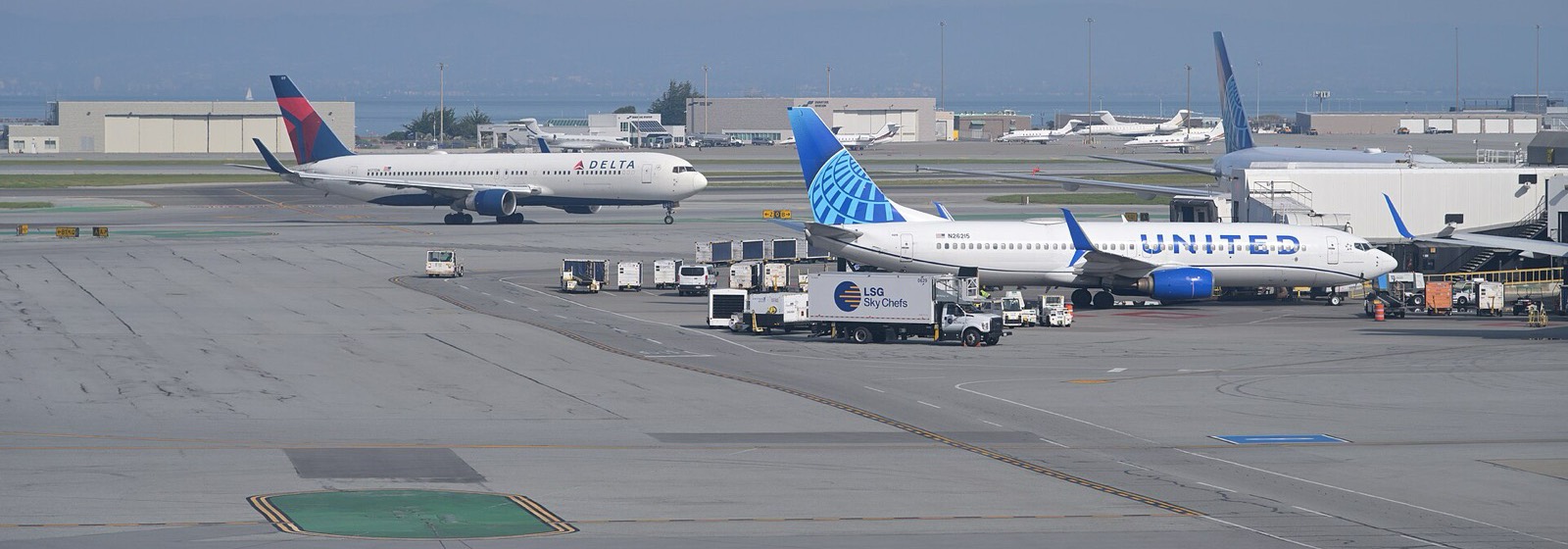
Most American flyers build status with the airline they fly: United, American or Delta. But if what you really want is the alliance perks, such as business-class check-in, an extra bag and lounge access, there is another route. You can credit the same flights to another airline's program in the same alliance, and some of those programs count distance, not the price you paid. For some flyers that gets Star Alliance Gold, oneworld Sapphire or SkyTeam Elite Plus in a fraction of the flights. For others it's a waste of effort. We ran four typical US flyers through the status calculator.
The short version
| Flyer | What they pay | Round trips to the alliance tier | Better choice |
|---|---|---|---|
| 1. Cross-country economy on UnitedSan Francisco–Newark, 12 round trips | 10¢ a mile | United 24 · Turkish 8 | Other program |
| 2. Cross-country economy on AmericanNew York–Los Angeles, 10 round trips | 8¢ a mile | American 38 · Alaska Atmos 9 | Other program |
| 3. Domestic regular on DeltaAtlanta–Los Angeles, 20 round trips | 12¢ a mile | Delta 23 · Korean Air about 13 a year | Close, Korean Air has the edge |
| 4. Business-class transatlantic on AmericanNew York–London, 4 round trips | 58¢ a mile | American 4 · Finnair 3 | No real difference |
Fares are our assumptions, so check them against what you pay. "Cents a mile" is the round-trip fare divided by the round-trip miles flown.
Programs that count what you spend, such as United's PQP and Delta's MQD, work best for flyers who pay a lot per mile. Programs that count distance don't care about the price. So the break-even is easy to work out. Crediting a United flight to Turkish beats United's own Gold when you pay less than about 30 cents a mile (United needs 12,000 PQP, Turkish 40,000 miles). Against KrisFlyer it's about 24 cents. On Delta, crediting to Korean Air wins below about 20 cents a mile (Delta Gold needs 10,000 MQD, Korean Air about 50,000 miles a year). Economy fares in our examples work out at 8 to 12 cents a mile, well under those lines. The business-class fare works out at 58 cents, which is over.
What you actually get from alliance status
Alliance mid-tier status is Star Alliance Gold, oneworld Sapphire or SkyTeam Elite Plus. The usual benefits are priority check-in and boarding, an extra checked bag, and lounge access. The rules are set by each airline, and the details matter for a US flyer:
- United Clubs and Star Alliance Gold. Star Alliance's lounge policy says a United MileagePlus Star Alliance Gold member can use United Clubs in the US only when departing on an international Star Alliance flight, not on a domestic United flight. It doesn't spell out the rule for Gold members from other programs, so check United's current lounge page before counting on it.
- Admirals Club and oneworld Sapphire. American says members of other oneworld programs get Admirals Club access when flying any oneworld airline, whatever the cabin. But it limits Alaska Atmos Gold, Platinum and Titanium to qualifying international flights between the US and Asia, Australia, Central America, Europe, New Zealand and South America. That's a real difference: Atmos Gold is the quickest way to Sapphire in scenario 2, but for lounge access in the US a program such as Finnair Plus is less restricted.
- Delta Sky Club and SkyTeam Elite Plus. Delta's own pages are not fully consistent. They list Sky Club access for Elite Plus members who aren't in Delta's program, with a note that Delta's own Medallion members need an international trip in Delta One or Delta Premium Select. Confirm with Delta first.
- Extra bags. SkyTeam describes an extra 20 kg or one more bag for Elite Plus, while Delta describes one extra piece. The allowance depends on the airline and the route.
Sources: Star Alliance lounge access policy; American: Admirals Club access; Delta: international partner and SkyTeam benefits; SkyTeam: frequent flyer benefits. Checked October 11, 2026.
What you give up by crediting to another program is the airline's own perks: upgrades, free checked bags on its flights, bonus miles and the airline's lounge benefits, and anything tied to its co-branded credit card. And you earn the other program's miles, not the US airline's.
Four typical US flyers
Each figure is what one round trip earns in the status calculator, multiplied by the round trips in a year. Every figure links to the calculation. Booking class is standard economy (class M) or business (J), and we count from no status.
1. Cross-country economy on United: 12 round trips San Francisco–Newark
A consultant who flies United in standard economy between San Francisco and Newark twelve times a year. Assumed fare US$500 round trip, which is 10 cents for every mile flown.
| Program and target | Per round trip | In a year12 round trips | Share of target | Round trips needed |
|---|---|---|---|---|
| Turkish Miles&SmilesElite (Star Gold): 40,000 Status Miles | 5,130 | 61,560 | Reached | 8 |
| KrisFlyerElite Gold (Star Gold): 50,000 Elite miles | 5,130 | 61,560 | Reached | 10 |
| United MileagePlusPremier Gold (Star Gold): 12,000 PQP | 500 | 6,000 | 50% | 24 |
| Air Canada Aeroplan35K (Star Gold): 35,000 SQC | 1,026 | 12,312 | 35% | 35 |
The other programs win by a wide margin. Each round trip earns 500 PQP in MileagePlus, so Premier Gold takes 24 round trips. Crediting the same flights to Turkish or KrisFlyer earns 5,130 miles each time, and Gold takes 8 round trips with Turkish and 10 with KrisFlyer. In a year of 12 round trips, the United route gets you to Premier Silver, while either of the other two gets you past Gold. Aeroplan is poor here: United flights earn only a fifth as many SQC as points.
2. Cross-country economy on American: 10 round trips New York–Los Angeles
A manager who flies American in standard economy between New York and Los Angeles ten times a year. Assumed fare US$400 round trip, or 8 cents a mile.
| Program and target | Per round trip | In a year10 round trips | Share of target | Round trips needed |
|---|---|---|---|---|
| Alaska Atmos RewardsGold (oneworld Sapphire): 40,000 status points | 4,950 | 49,500 | Reached | 9 |
| Finnair PlusGold (oneworld Sapphire): 45,000 tier points | 2,475 | 24,750 | 55% | 19 |
| American AAdvantagePlatinum (oneworld Sapphire): 75,000 Loyalty Points | 2,000 | 20,000 | 27% | 38 |
Alaska Atmos Rewards gets there more than four times faster than AAdvantage. American's program pays 5 Loyalty Points per dollar when you have no status, so a $400 round trip earns 2,000, and Platinum (oneworld Sapphire) takes 38 round trips. Atmos credits the same flight at 4,950 status points, so Gold (also oneworld Sapphire) takes 9. Finnair Plus is slower, at 19 round trips, but its Sapphire isn't limited to international flights at Admirals Clubs. JAL would sit between them on paper (3,465 a round trip), but needs half its points from JAL Group flights. Alaska changes how it credits partner flights on January 1, 2027, so check its current chart before you commit.
3. Domestic regular on Delta: 20 round trips Atlanta–Los Angeles
A sales manager who flies Delta in Main Cabin between Atlanta and Los Angeles twenty times a year. Assumed fare US$450 round trip, or 12 cents a mile.
| Program and target | Per round trip | In a year20 round trips | Share of target | Round trips needed |
|---|---|---|---|---|
| Delta SkyMilesGold Medallion (SkyTeam Elite Plus): 10,000 MQD | 450 | 9,000 | 90% | 23 |
| Korean Air SKYPASSMorning Calm Select (SkyTeam Elite Plus): 100,000 flown miles in two years | 3,893 | 77,860 | 78% | 26 (about 13 a year over two years) |
| Flying BlueGold (SkyTeam Elite Plus): 180 XP | 4 | 80 | 44% | 45 |
| Virgin Atlantic Flying ClubGold (SkyTeam Elite Plus): 1,000 Tier Points | 20 | 400 | 40% | 50 |
Close, with one other program ahead. Delta pays one MQD per dollar of base fare, so Gold Medallion takes about 23 round trips at this fare, and 20 round trips gets you to 90% of it. Korean Air SKYPASS counts the miles flown, 3,893 a round trip. Its Morning Calm Select, which is SkyTeam Elite Plus, needs 100,000 miles within two years, or about 13 round trips a year. Flying Blue and Virgin Atlantic are no use here: they count XP and Tier Points per flight, and short US flights earn almost none. Check that Korean Air credits your fare on a US domestic Delta flight before relying on this.
4. Business-class transatlantic on American: 4 round trips New York–London
A banker who flies American business class between New York and London four times a year. Assumed fare US$4,000 round trip, which is 58 cents for every mile flown.
| Program and target | Per round trip | In a year4 round trips | Share of target | Round trips needed |
|---|---|---|---|---|
| Finnair PlusGold (oneworld Sapphire): 45,000 tier points | 17,258 | 69,032 | Reached | 3 |
| Alaska Atmos RewardsGold (oneworld Sapphire): 40,000 status points | 13,806 | 55,224 | Reached | 3 |
| American AAdvantagePlatinum (oneworld Sapphire): 75,000 Loyalty Points | 20,000 | 80,000 | Reached | 4 |
The other program is a trip faster, and that's not worth it. At this fare AAdvantage pays 20,000 Loyalty Points a round trip, so Platinum takes 4 round trips. Finnair Plus takes 3. Once the fare per mile is this high, spending a lot of money earns almost as fast as distance. You would give up American's own upgrades and perks for one fewer flight.
Before you try it
- Check the airline's chart. Each program publishes how it credits partner flights, by booking class. Basic Economy fares and some discounted classes earn little or nothing. Our guides to Turkish, KrisFlyer, Alaska Atmos, Finnair Plus and Korean Air link to each.
- One program per flight. You can credit each flight to only one program, so give the other program's number at booking or claim the miles afterwards.
- Use the status you earn. Alliance status is only recognized on that alliance's airlines and for the benefits that alliance offers. If you fly mostly one US airline, its own status may bring more than the alliance version.
- Rules change. Programs adjust their charts and tiers. See the status targets page for the current numbers.
How we worked it out
Round-trip figures come from the status calculator on October 11, 2026, with each program's partner or own earning rules. Yearly totals are those figures multiplied by the trips shown. United and Delta earn by what you spend, using the fares above, and American pays 5 Loyalty Points per dollar before status bonuses. Distance-based programs count the miles flown at the rate for standard economy (class M) or business (J). Credit card spending, promotions and any status bonuses aren't included.
Pick the airline you fly, the booking class and the program you'd credit to, and see which gets you to status first.
Open the status calculator